

Capacity dependency · anesthesia workforce
A surgical service depends on more than surgeon supply. Anesthesia workforce projections add one essential planning layer, but they do not prove that a particular operating room is staffed or available.
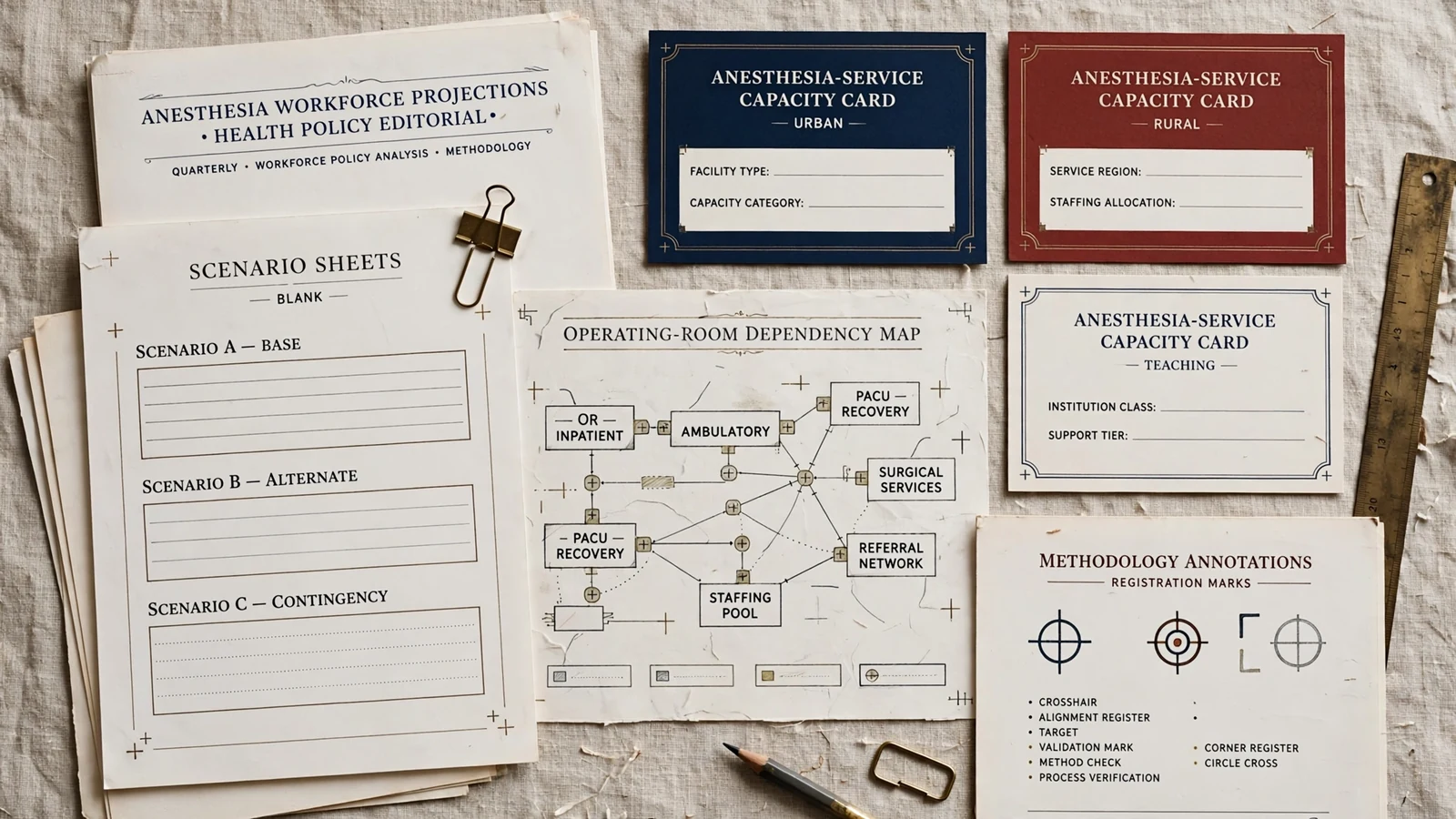
Model the dependency without inventing capacity
HRSA’s workforce dashboard offers projections by discipline at state and national levels and supports alternative scenarios. This makes it possible to ask whether projected changes in an anesthesia occupation could affect workforce planning. It does not connect modeled workers to operating rooms, schedules, procedure types or coverage arrangements at a named facility.
A useful analysis keeps two records. The first is the projection: occupation, geography, baseline, future year, supply, demand and scenario. The second is the service record: facility, current clinical service, staffing arrangement, time period and source. Joining those records requires evidence; proximity or a shared state label is not enough.
Questions that belong in the methods note
- Which anesthesia occupation does the dashboard category represent?
- Is the value a headcount, full-time-equivalent estimate or another unit?
- Which scenario produced the displayed demand?
- Does the geography describe residence, workplace or model allocation?
- Which local source confirms actual surgical coverage?
Capacity is time- and service-specific
A facility can have anesthesia personnel and still lack coverage for a particular procedure, time of day or patient need. Conversely, a regional workforce constraint does not show that every facility has the same staffing pattern. Emergency coverage, elective schedules and transfer pathways should be reported separately when current records support them.
Use a workforce projection to define a planning question. Use a current facility record to answer a capacity question.
The companion method for nurse anesthetist data and the larger evidence chain are organized under the surgical workforce and care access hub.